About Janice D. Green

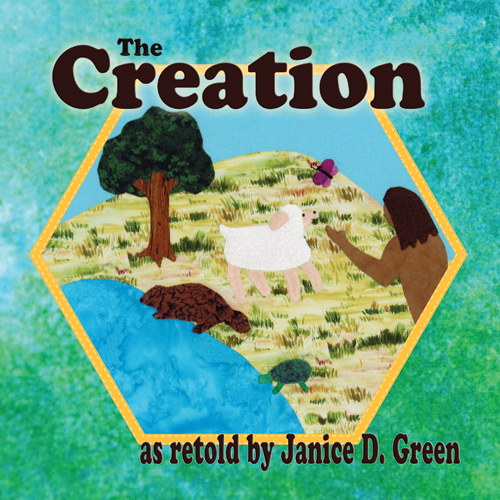
Janice D. Green retired as an elementary librarian to write books. She is author, illustrator, and publisher of The Creation, a Bible storybook for children. The colorful illustrations are hand appliqued fabric pictures that have been put together to make a Bible quilt. Her passion is to write about the Bible in a way that encourages people to want to read it for themselves. Through this Bible Quilts blog she hopes to encourage others to make Bible quilts for the children in their lives. www.honeycombadventures.com www.biblequilts.com.

Hexagon quilts tutorial(s)

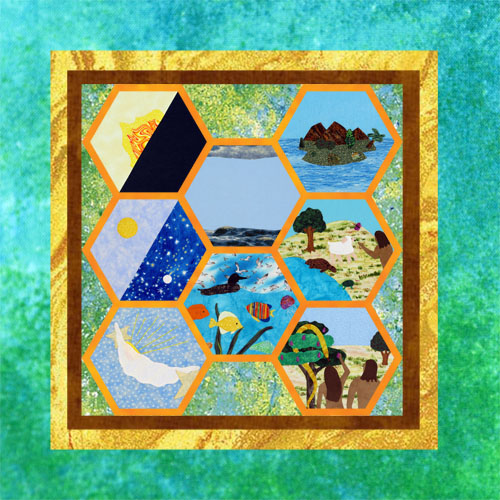
I am making hexagon quilts because the theme of my Bible storybooks is based on the honeycomb. I do NOT recommend this for beginners. I am getting ready to cut out sashing and sew my hexagon quilt together using the appliqued hexagon shaped pieces I stitched as illustrations for my book The Creation. Now I am biting my fingernails figuratively speaking and looking for tutorials on how to sew a hexagon quilt together. In the event others will wish to try this approach to making Bible quilts, I want to post the tutorials and helps I find here as I work my way through putting this quilt together. I will continue to add to and revise this post as I go along. I hope if any of my readers find this and have suggestions they will post them as comments.

Here is a tutorial for putting together a hexagon quilt. My first reaction to this is that I can’t use it because I am adding sashing to my quilt, but I haven’t found any directions for a sashed hexagon quilt yet so I’ll save it here. I may add my sashing differently and still use this approach. Kay Wood’s tutorial on making a hexagon quilt.  She does offer a unique way to cut out hexagon pieces that could come in handy in creating future hexagon quilt background pieces.

Here is another tutorial on doing set in seams. It includes tips on sashing a quilt with points, but it is not a hexagon quilt. American Quilters Magazine – Set-in Seams .

I came across another tutorial for a way to assemble the hexagon pieces by hand. It would be time consuming, but may be easier to manage. Quilt Pattern Magazine.com – English Paper Piecing Basics.
Pressing crayon to set color

I received some excellent feedback from Dottie Bailey, a quilter on the Quilting Board forum (www.quiltingboard.com), about the proper way to press the fabric and set the color after coloring it with crayons.

She said, use white towels with no texture. They need to be completely smooth or they will transfer the bumpy texture (to look like tiny dots in your crayoned shapes) and it will look…..not as good as I think it could. These tend to be the name brand, more expensive paper towels but you don’t use many sheets at a time. Also===very important—-place the towel over the page, iron well, and if the towel gets any color on it at all, which it most likely will, DO NOT reuse it. It will transfer the color from one page to another and ruin the second one.

You can also use copy paper. No problems with bumpy texture there, but you can only use each page once (like the paper towels ) because of the problems with transferring color from one page to another.

Play with a piece of fabric and a quickly colored page to test all of this and get used to it before doing the real thing. It’s not hard at all but you just have to be careful.

Dottie added that there might be a situation where a quilter might want to experiment with different textured paper towels for added effects, but probably not on one of these Bible quilt pictures.

Thank you Dottie for this very helpful information.

Bible quilts – a team effort

As much as I love the idea of making Bible quilts, and I hope and pray many will take this idea and “run with it,” I want to encourage youth leaders to think it through and have a plan for getting the final quilting done – sewing the top to the batting and backing.

And in the same breath I encourage quilters who catch this vision to step forward and offer to help the youth with this project. Perhaps a group of women might meet together on a regular basis and start a “quilting bee” for completing the quilt(s) started by the youth.