Appliqué Quilting

I have been teaching myself to hand appliqué quilt blocks for about five years. Because I plan to use my quilt blocks as book illustrations as well as for a Bible quilt, I am very picky about the quality of my blocks and have re-done every block for my first book, The Creation.

There are websites available that teach the hand appliqué technique of quilting so I don’t plan to re-invent the wheel by writing it all out. I may comment from time to time on how I resolved a particular problem I faced with a given quilt block. Here are a few teaching links to get you started:

http://quiltbug.com/articles/applique-tips.htm

http://www.quilt.com/HowTo/AppliqueHowToPage.html

I’ll add more posts from time to time showing the approaches that work for me. There are so many different ways to do appliqué.


What is the vision for BibleQuilts.com?

My vision for this project is for children to go to bed with Bible quilts, and seeing the pictures they point to one and ask to hear the story read or told. I believe Bible quilts can become catalysts that will encourage family devotions and Bible reading at bedtime.

Through this blog I hope to stimulate an interest in creating Bible quilts among parents, grandparents, and aunts and uncles of children everywhere. I would also like to build a support group with other quilters to further stimulate the concept of making Bible quilts.

See also my Bible storybook The Creation at http://honeycombadventures.com/books/

Janice D. Green
Author, illustrator, and publisher
Honeycomb Adventures Press, LLC

Subscribe to Bible Quilts by Email

The feed address to subscribe to Bible Quilts via your feed reader is  http://feeds.feedburner.com/biblequilts


Mama’s Sewing Pin

Mama's Pin

When I use Mama's pin I am reminded of the rich heritage she gave me through her love for sewing.

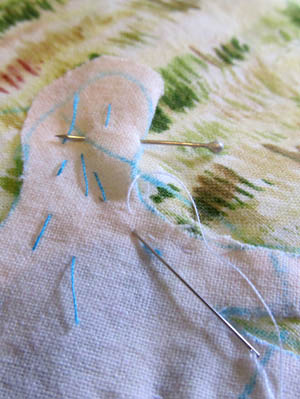
As I worked on my latest quilt block for my Bible storybook, The Creation, I reached for a pin in my pincushion to hold a turned piece of fabric in just the right position while I hand stitched it to the background. Although there are probably 100 pins in my pincushion, I had a particular one in mind – Mama’s pin.

Pins are pins, I argue with myself as I take the time to pick out Mama’s pin, but that’s not the point. Mama’s pin reminds me of Mama and brings her a little closer to me as I sew.

I haven’t had Mama’s pin very long – a little over a year. The last time I stayed with Mama in her condo before she moved into assisted living, I needed to borrow a pin for something. This particular pin had a ball-shaped silver head on it or I wouldn’t have remembered it from any other pin. It had probably been salvaged from the packaging on something she bought in a store. When I got back home I discovered the pin in my things and put it in my pincushion.
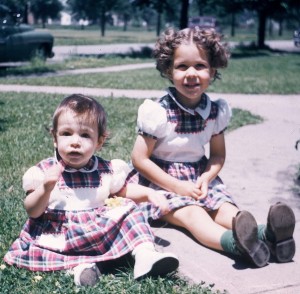
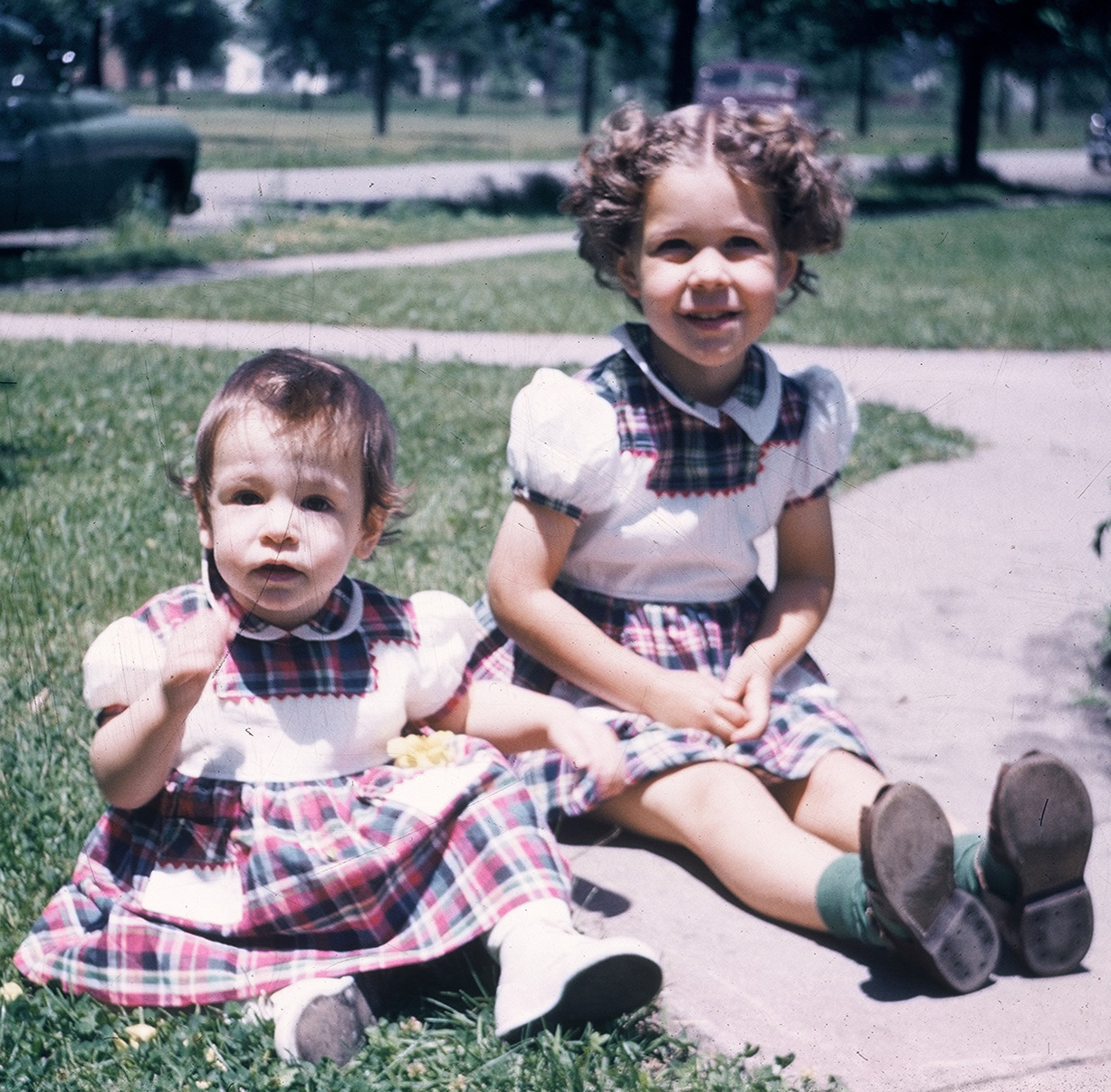
Joan and Janice

My younger sister and I wearing dresses Mama made from shirt factory remnants

Probably my earliest memory of Mama is of her sewing. WWII had just ended when I was born and times were tough. Mama had learned of a shirt factory where she could get fabric scraps that she could use to make dresses for my sister and me (and a couple of neighbor girls and my cousins.) I wanted to sew too but fabric was expensive and I was only about 4 or 5. I looked at the back of the pattern and wanted Mama to let me cut out the tiny pattern piece shapes printed there and make a real dress, but in her wisdom, she insisted that it wouldn’t work. Mama gave me a scrap of cloth to fold over my flat doll that had paper doll clothes.

A few years later I was old enough to take sewing in 4-H and I made an apron and a head scarf, but I couldn’t be satisfied until I made something from a pattern. Because fabric was expensive, I purchased a doll pattern and used a small piece of fabric Mama had salvaged to cut out and sew my first dress – granted, it was quite small. But it wasn’t long before I began making my own clothes. In Home Ec. I made a skirt, and for my homework sewing assignment I made a pair of shortie pajamas that I was so proud of. Soon I was making my own Easter dresses and other clothes. I later made my own prom dresses and my wedding dress. Now I’m taking my sewing in a different direction by making hand-stitched appliqué quilt blocks for a Bible quilt. These quilt blocks will also be the illustrations for my Bible storybooks.

I wonder if I would have ever grown to love sewing as much if I hadn’t first seen my Mama spending hours at the sewing machine making dresses and shirts for her children to wear.  Mama gave me so much without ever realizing it, by just doing the things she loved. When I use Mama’s pin I am reminded of the rich heritage she gave to me in sewing.
 

Paper Quilts

Make a Simple Quilt From Paper

Materials:

  • Pictures from coloring books, Bible storybooks, or Internet
  • Drawing paper
  • Wide roll of bulletin board paper – available at teacher supply stores
  • Crayons or paint
  • Optional: brightly colored construction paper, wallpaper, scrapbook paper, gift wrap, or other fancy paper

Procedure:

  • Trace or print pictures onto art paper
  • Color pictures
  • Trim pictures to the size you want
  • Arrange on bulletin board paper
  • Add strips of construction paper or decorative paper between the colored pictures to add interest
  • Display paper quilt on wall


Use crayons to color a Bible quilt

Make a Bible quilt. The children can color the pictures.

Materials needed:
  • Bible story pictures from coloring books, Bible story books, or the Internet. (Note: Plans are under way to offer specially designed collections of Bible pictures for making Bible quilts on this web site.)
  • Large assortment of crayons (Crayola TM with 64 colors or more recommended) Crayon alternative: Fabric paints may be used but much are more tedious. Do not use cheap acrylic paints as they will not hold up in the laundry.)
  • Ultra-fine-point Sharpie permanent marker, Faber-Castell Pitt artistic pen (Indian ink) or other ultra-fine-point fabric marker
  • Roll of plastic or wax coated freezer paper
  • 2-4 yards of white or bleached muslin or quilting cotton
  • Additional fabric and batting to complete the quilt

Highly desirable:

  • Large light box for tracing patterns
  • Access to scanner or copy machine
  • Computer to enlarge or reduce picture size

Procedures:

    • Select pictures and plan to make them all the same size.
    • Copy, scan, or trace pictures onto copier paper if you plan to use a light box or alternative light source for tracing the picture onto fabric. (Note, you can’t just tear out a coloring book page as both front and back will show through when you use the light box.)
    • Using a copier or computer, enlarge or shrink picture as needed to fit fabric size.
    • Cut fabric pieces allowing an additional ¼ to ½ inch on all sides for seams.
    • Cut freezer paper the same size as the fabric pieces and iron it to the back of them using the cotton or wool setting on the iron. Do not use steam. The freezer paper will stiffen the fabric while you trace and color.
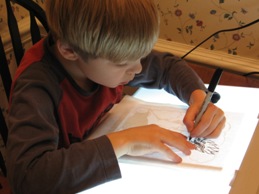
    • Wesley tracing picturePlace a drawing under a piece of fabric pressed onto freezer paper with the  fabric side on top. Tape the drawing to the fabric to keep it from slipping, and trace the picture onto the fabric. A light box is almost indispensable here, however a lamp and a glass top table may be used, or the drawing and fabric may be taped to a well lit window for tracing.


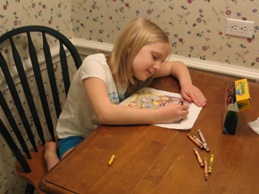
    • Erica coloring pictureColor the pictures on the fabric with Crayola crayons. If your fabric is not 100% cotton, you will need to purchase special fabric coloring crayons and will have fewer colors to choose from. Color as evenly as possible. Crayons may be used lightly as in coloring the sky, or it may be colored in very heavily for deep rich colors. Both will come out okay.


  • With the tracing paper still attached to the fabric, place a paper towel over the picture and iron it using the wool setting. Do not use steam. Use another paper towel and repeat as often as necessary until no color transfers to the towel.
  • The picture is ready to peel away from the freezer paper and sew into the Bible quilt. (Note: If you wish to add more color you may do so and iron again.)
  • Alternative solution to using freezer paper and light box: You may be able to see through the fabric alone well enough to trace without a light box. It is also possible to color on the fabric without the freezer paper if you place the fabric over a piece of sandpaper to hold it steady as you color.
  • Quilt assembly: Arrange your pictures in rows on the top of a bed to arrive at a plan for sewing the pieces together. Sew a strip of fabric (sashing) between each picture using the size seams you decided on earlier. Measure and adjust the size of the sashing as needed to get each row to come out to the same length. Sew a strip of sashing between each row, at the top and bottom, and up and down each side. Then cut a wider strip of fabric to make a border to go around the pictures. If you are not a practiced seamstress, look for an experienced quilter to guide you as you assemble and complete your quilt. Contact one of the quilt shops or fabric shops in your area if you don’t know any quilters.